
A Meeting of the Working Group Promoting the Improvement of Atmospheric Air Quality of the Central Zone was Held
A Meeting of the Working Group Promoting the Improvement of Atmospheric Air Quality of the Central Zone was Held
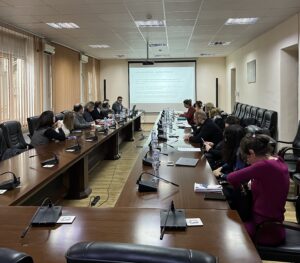 Today, on December 8, the first meeting of the working group promoting the improvement of atmospheric air quality in the central zone was held at the Ministry of Environmental Protection and Agriculture of Georgia.
By the order (#2-812) of the Minister of Environmental Protection and Agriculture of Georgia dated October 31, 2022, “Gavigudet” is a member of the working group promoting the improvement of atmospheric air quality in the central zone.
We remind you that the Georgian Law on Ambient Air Protection was amended in 2020, and the territory of Georgia was divided into zones and agglomerations based on the results of the assessment of the quality of the ambient air, the inventory of the release of harmful substances into the atmospheric air, and geographical and meteorological parameters. These zones and agglomerations were classified by the National Environment Agency.
The territory of Georgia was divided into five zones and one agglomeration of Tbilisi.
The zones were divided as follows – the Black Sea zone, the western zone, the central zone, the eastern zone, and the mountainous zone.
The central zone includes Shida Kartli, Kvemo Kartli and Mtskheta municipality; Therefore, Rustavi municipality is part of the central zone.
The purpose of division into zones and agglomerations is to improve the management and monitoring system of ambient air quality. Therefore, today’s meeting was dedicated to highlighting the problems surrounding this topic and providing a general overview of future plans and measures.
The Action Plan for the Improvement of Air Quality in Rustavi for 2020-2022 will not be updated in the future (see the results of the 2022 interim report of the plan on the link), however, it was revealed at the meeting that due to the scale of industry, the action plan developed within the central zone will mainly focus on Rustavi.
See below a general list of issues that the Central Zone Air Quality Improvement Action Plan may attempt to address and/or solve:
– reduction of emissions from the industrial sector;
– expansion/improvement of green spaces and maintenance of transport infrastructure;
– improvement of public transport;
– promotion of movement on foot and by bicycle;
– Unloading of traffic;
– development of electric transport;
– reduction of emissions from the construction industry;
– reduction of pollution from households;
– improvement of atmospheric air quality monitoring;
– Raising public awareness.
Our team highlighted a number of issues at the meeting that we think should be covered by the action plan in order for it to function properly and effectively and provide visible results:
– increasing public engagement in the plan implementation stage – it would be beneficial to hold interim meetings during the reporting period to assess progress and challenges even before reading the report. Periodic meetings with members of civil society, the Ministry’s central office, the municipality, and other agencies will help us in determining the source of a problem and eradicating it in a timely manner.
– Timely performance of the activities provided in the plan;
– Instead of mitigating harm, focus on prevention;
– to increase the number of unscheduled inspections and to establish the intensity of the production area’s visit by the Department of Environmental Supervision;
– Determine the load norm for the city;
– To fix the road around the enterprises;
– to solve the problem of intercity transport service;
– Raw material storage should be carefully monitored and regulated as it is a significant source of dust;
– To solve the issue of slag management;
– NCDC to engage in better processing of health data – to establish the minimum data needed to conduct research and provide obligations to relevant agencies; Production of data in clinics based on place of residence so that patients from Rustavi are excluded from Tbilisi statistics.
– Conducting research to study the increase of nitrogen dioxide in Rustavi;
– Annual concentration indicators/annual reports should be published on air.gov.ge;
it would be beneficial to add the activities carried out in the cities in terms of air protection;
– In the new air management plan, the indicators should be customized to Rustavi instead of just the central zone;
– The results of self-monitoring should be made public and added to air.gov.ge
We would also like to inform you that the installation of an industrial station in Tazakendi is planned as part of the aforementioned plan. The station will provide extensive information on the pollutants present in that specific area.
The mentioned action plan will be adopted for a three-year term. Our staff will do all possible to be actively involved in the plan’s implementation and monitoring of its execution in order to enhance air quality in our city.